
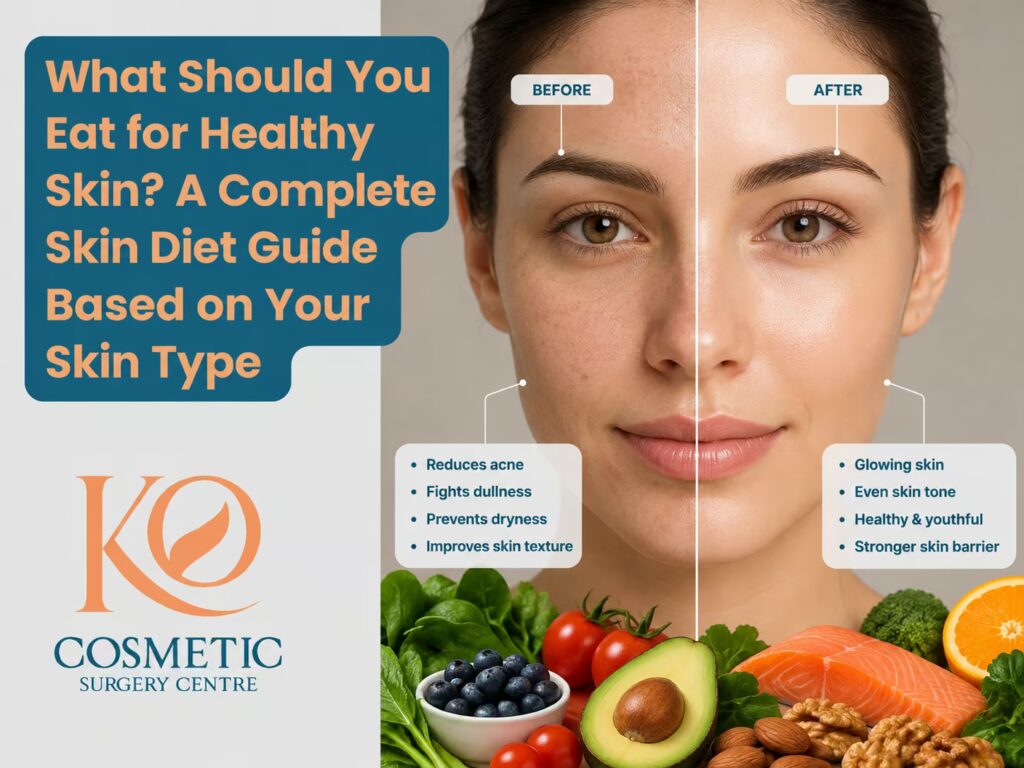
Your skincare routine is only one part of healthy skin. Cleansers, serums, moisturizers, and sunscreens work externally, while your diet provides the nutrients your body needs to support processes such as collagen production, antioxidant protection, skin-barrier function, and hydration. But there isn’t one perfect diet for everyone. Your skin type and skin concerns can help determine which nutrients you should pay more attention to. In this guide, we’ll look at the nutritional needs of different skin types and concerns, followed by a practical Skin Diet Food Guide showing what you can add to your everyday meals.
1. Normal Skin – Focus on Overall Skin Health
Normal skin generally has a balanced oil and moisture level. The goal is to maintain this balance and provide the body with essential nutrients for healthy skin.
Key nutritional needs
| Nutrient | Why it matters for skin |
| Vitamin C | Supports collagen formation and antioxidant protection |
| Vitamin A | Supports normal skin-cell turnover |
| Vitamin E | Provides antioxidant support |
| Omega-3 fatty acids | Supports the skin barrier |
| Protein | Provides amino acids needed for skin structure |
| Water | Supports normal hydration |
What should you focus on?
A varied, balanced diet containing adequate protein, fruits, vegetables, healthy fats, and fluids is generally more useful than focusing on a single “skin food.”
2. Dry Skin – Focus on Skin Barrier & Hydration
Dry skin can feel tight, rough, flaky, or uncomfortable. While moisturizers and a suitable skincare routine are important, nutrition can also support your skin from within. For dry skin, the main nutritional focus is on supporting the skin barrier, maintaining adequate hydration, providing healthy fats, and supplying the body with enough protein and antioxidants.
Key Nutritional Needs
| Nutrient | Why it matters for skin |
| Omega-3 fatty acids | Support normal skin-barrier function and healthy fats. |
| Essential fats | Provide fatty acids needed for normal body functions. |
| Vitamin E | Provides antioxidant support |
| Water | Helps maintain normal hydration |
| Protein | Provides amino acids needed for tissue maintenance |
A balanced diet containing healthy fats, adequate protein, antioxidant-rich foods, and sufficient fluids can help support overall skin health. However, nutrition works alongside—not instead of—moisturizers and appropriate skincare for managing dry skin.
3. Oily Skin – Focus on Balanced Nutrition
Oily skin produces more sebum and may be more prone to clogged pores and breakouts. Although diet can play a role in overall skin health, oil production is also influenced by hormones, genetics, skincare, and lifestyle. The nutritional focus should therefore be on a balanced diet that provides essential vitamins, minerals, antioxidants, and adequate protein.
Key Nutritional Needs
| Nutrient / Dietary Factor | Why it matters for skin |
| Vitamin A | Supports normal skin-cell function |
| Zinc | Supports normal skin function |
| Vitamin C | Supports collagen formation and antioxidant protection |
| Protein | Supports tissue maintenance |
| Antioxidants | Help protect cells from oxidative stress. |
| Balanced carbohydrates | Supports a balanced overall eating pattern |
| Water | Supports normal hydration |
Rather than completely avoiding carbohydrates or fats, focus on balanced meals and limit excessive amounts of highly refined and sugary foods. For people who also have acne, a lower-glycemic dietary pattern may be worth considering as part of an overall healthy lifestyle.
4. Acne-Prone Skin – Focus on Blood Sugar Balance & Skin Support
Acne is a complex skin condition influenced by factors such as excess oil production, clogged pores, inflammation, and hormones. Diet may influence acne in some people, but food alone cannot replace appropriate acne treatment. Nutritionally, the focus can be on maintaining balanced blood sugar levels and providing nutrients that support normal skin function.
Key Nutritional Needs
| Nutrient / Dietary Factor | Why it matters for skin |
| Lower-glycemic carbohydrates | May help reduce frequent blood-sugar spikes |
| Zinc | Supports normal skin function |
| Omega-3 fatty acids | Support normal inflammatory processes. |
| Vitamin C | Provides antioxidant support |
| Antioxidants | Help protect cells from oxidative stress. |
| Protein | Supports tissue maintenance |
A balanced diet with plenty of nutrient-dense foods may support overall skin health. Some research has also found an association between certain dairy products and acne in some people, but dairy does not need to be automatically eliminated. If you notice a consistent relationship between a particular food and your breakouts, discuss dietary changes with a qualified healthcare professional.
5. Pigmentation-Prone Skin – Focus on Collagen & Antioxidant Support
Pigmentation can develop for many different reasons, including sun exposure, acne, hormonal changes, and inflammation. Nutrition can support the body’s normal skin functions, particularly collagen formation and antioxidant protection. However, nutrition alone cannot remove pigmentation, and daily sun protection remains an important part of managing pigmentation concerns.
Key Nutritional Needs
| Nutrient | Why it matters for skin |
| Vitamin C | Supports collagen formation and antioxidant protection |
| Vitamin E | Provides antioxidant support |
| Vitamin A | Supports normal skin-cell function |
| Polyphenols | Provide antioxidant support. |
| Carotenoids | Provide antioxidant support. |
| Protein | Provides amino acids needed for tissue maintenance |
Including a variety of nutrient-rich foods can help provide these nutrients as part of a balanced diet. For persistent pigmentation, however, the underlying cause should be identified because treatment may involve sun protection, topical skincare, procedures, or other professional approaches depending on the diagnosis.
6. Dull & Tired-Looking Skin – Focus on Antioxidant Support
Skin can sometimes appear dull, tired, or less radiant due to several factors, including inadequate sleep, dehydration, sun exposure, lifestyle, and nutrition. A diet containing a variety of colorful plant foods can provide antioxidants and essential micronutrients that support normal skin function and help protect cells from oxidative stress.
Key Nutritional Needs
| Nutrient | Why it matters for skin |
| Vitamin C | Supports collagen formation and antioxidant protection |
| Vitamin E | Provides antioxidant support |
| Carotenoids | Provide antioxidant support. |
| Polyphenols | Help protect cells from oxidative stress. |
| Iron | Essential for normal oxygen transport |
| Zinc | Supports normal skin function |
| Protein | Supports tissue maintenance |
Instead of relying on one particular “glowing skin” food, aim for variety. Different colored vegetables and fruits, adequate protein, healthy fats, and sufficient fluids can collectively provide a broader range of nutrients that support healthy-looking skin.
7. Premature Aging – Focus on Collagen & Antioxidant Support
Skin aging is a natural process, but factors such as UV exposure, smoking, lifestyle, and oxidative stress can contribute to premature visible changes. Nutrition can support the building blocks and protective systems involved in maintaining healthy skin, particularly through adequate protein, vitamin C, healthy fats, and antioxidant-rich foods.
Key Nutritional Needs
| Nutrient | Why it matters for skin |
| Vitamin C | Supports collagen synthesis and antioxidant protection |
| Protein | Provides amino acids needed for tissue maintenance |
| Omega-3 fatty acids | Support normal skin-barrier function. |
| Vitamin E | Provides antioxidant support |
| Carotenoids | Provide antioxidant support. |
| Polyphenols | Provide antioxidant support. |
| Water | Supports normal hydration |
A nutritious diet works best as part of a broader skin-health routine that includes daily sunscreen, adequate sleep, regular physical activity, avoiding smoking, and using skincare appropriate for your skin. When visible signs of aging become a concern, professional skin treatments can also be considered based on individual needs.
8. Dehydrated-Looking Skin – Focus on Hydration & Fluid Balance
Dehydrated-looking skin may appear tight, dull, or less plump. Adequate fluid intake is important for overall health and contributes to normal hydration. Water-rich fruits and vegetables can also contribute to daily fluid intake while providing vitamins, minerals, and antioxidants.
Key Nutritional Needs
| Nutrient / Dietary Factor | Why it matters for skin |
| Water | Primary source of hydration |
| Electrolytes | Help maintain normal fluid balance. |
| Water-rich foods | Contribute to overall fluid intake. |
| Fruits & vegetables | Provide fluids along with vitamins, minerals, and antioxidants. |
The goal is adequate hydration rather than excessive water consumption. Drinking more water than your body needs does not automatically result in healthier skin. Combine adequate fluids with a balanced diet and an appropriate skincare routine to support healthy-looking, hydrated skin.
Skin Diet Food Guide
Now that we understand the nutritional needs of different skin types, let’s look at practical foods you can add to your daily diet.
Vitamin C Foods
| Food | Why include it? | How to add it |
| Amla | Excellent source of vitamin C | Fresh, grated, or as part of meals |
| Guava | Rich in Vitamin C | Whole fruit as a snack |
| Orange | Vitamin C + fluid | Whole fruit |
| Lemon | Adds vitamin C to meals | Add to water/food. |
| Kiwi | Vitamin C + antioxidants | Breakfast/snack |
| Papaya | Vitamin C + carotenoids | As a fruit serving |
Omega-3 Rich Foods
| Food | Why include it? | How to add it |
| Walnuts | Plant-based omega-3 (ALA) | Small handful |
| Chia seeds | Rich in ALA | Add to yogurt/oats |
| Flaxseeds | Good source of ALA | Ground into meals |
| Fatty fish | Rich source of EPA/DHA | Include in meals |
| Hemp seeds | Contains healthy fats | Add to salads/oats. |
Antioxidant-Rich Foods
| Food | Key benefit |
| Berries | Polyphenols and antioxidants |
| Green tea | Rich in polyphenols |
| Spinach | Carotenoids + micronutrients |
| Tomatoes | Lycopene |
| Carrots | Beta-carotene |
| Bell peppers | Vitamin C + antioxidants |
| Pomegranate | Polyphenols |
Hydration-Supporting Foods
| Food | How to include |
| Water | Drink regularly throughout the day. |
| Watermelon | Snack/fruit serving |
| Cucumber | Salad or snack |
| Coconut water | Occasional beverage |
| Orange | Whole fruit |
| Muskmelon | Fruit serving |
Protein for Skin Health
| Food | Protein source |
| Eggs | Complete protein |
| Fish | Protein + healthy fats |
| Chicken | Lean protein |
| Greek yogurt/curd | Protein |
| Paneer | Protein |
| Lentils | Plant protein |
| Chickpeas | Plant protein |
| Soy/tofu | Plant protein |
Zinc-Rich Foods
| Food | How to include |
| Pumpkin seeds | Sprinkle over meals. |
| Sesame seeds | Add to dishes. |
| Chickpeas | Curry/salad |
| Lentils | Dal |
| Eggs | Breakfast |
| Meat | Main meal |
| Seafood | Main meal |
Visit KO Cosmetics.
Healthy skin isn’t only about what you put on your skin—it’s also influenced by what you provide your body through your diet. Instead of looking for one miracle food, focus on a balanced diet containing vitamin C, antioxidants, healthy fats, protein, essential vitamins and minerals, and adequate fluids. Your skin type and individual concerns can help guide your nutritional priorities, but persistent or significant skin problems should be evaluated by a qualified professional.
Looking for personalized skin treatment? If you’re dealing with acne, pigmentation, scars, aging concerns, uneven skin tone, or other persistent skin problems, visit KO Cosmetics Surgery Centre for a professional assessment and personalized treatment options.
Healthy skin starts with understanding your skin.
Nutrition supports it. Professional care helps you treat it.