
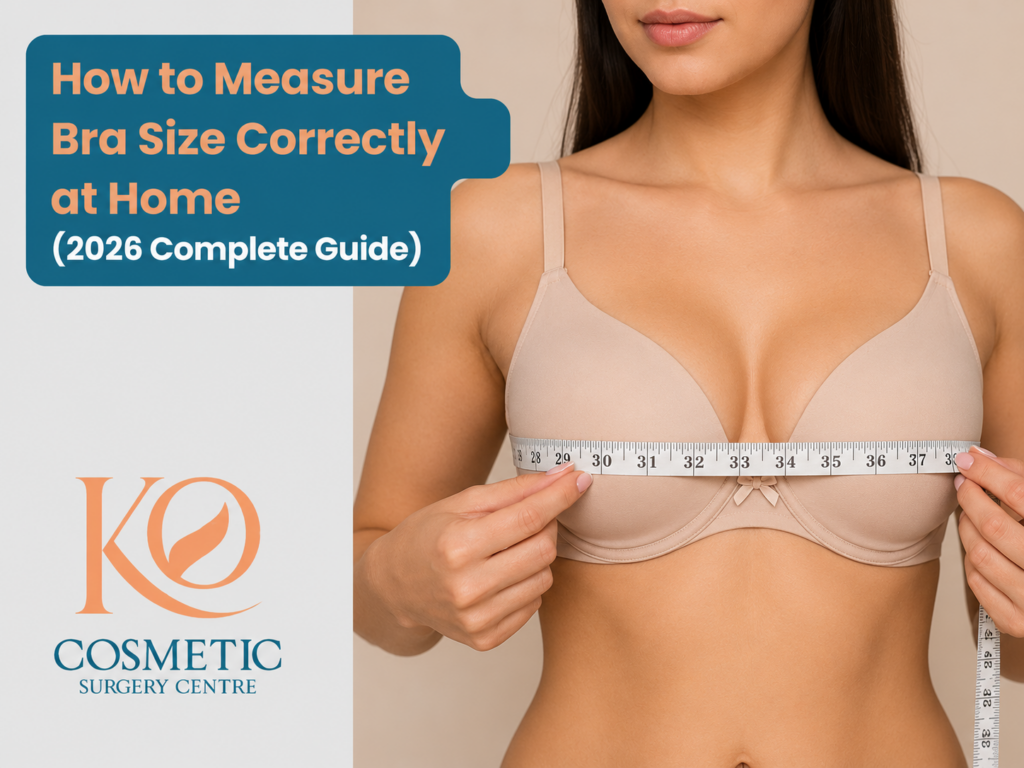
Finding the right bra size is one of the easiest ways to improve comfort, support, posture, and confidence. Surprisingly, many women wear the wrong bra size simply because they have never measured themselves correctly. The good news is that you can accurately measure your bra size at home using a measuring tape in just a few minutes.
In this guide, we’ll explain how to measure your bra size, calculate your cup size, understand bra size charts, and avoid common measuring mistakes.
Why Wearing the Correct Bra Size Matters
Wearing the correct bra size is essential for everyday comfort, proper breast support, and overall body alignment. A well-fitted bra helps distribute weight evenly, reduces strain on your shoulders and back, and enhances the way your clothes fit. It also improves confidence by providing the right shape and support throughout the day.
Benefits of Wearing the Right Bra Size
- Better breast support
- Improved posture
- Reduced shoulder and back pain
- Comfortable all-day wear
- Better clothing fit
- Prevents bra straps from slipping
- Reduces skin irritation and pressure marks
- Improves confidence and overall comfort
Choosing the wrong bra size can cause discomfort, skin irritation, poor posture, and inadequate support. Measuring your bra size regularly helps ensure a comfortable and healthy fit.
What You’ll Need
Before measuring your bra size, gather a few simple items to ensure accurate results. Using the right tools and measuring correctly will help you determine your ideal bra size for the best fit and comfort.
You’ll need:
- A soft measuring tape
- A mirror
- A non-padded bra (or measure without a bra for the most accurate results)
- A notepad or your phone to record the measurements
Step 1: Measure Your Band (Underbust) Size
The first and most important step in finding your correct bra size is measuring your band (underbust) size. This measurement is taken around your rib cage, just below your breasts, and forms the foundation of your bra size. A correctly measured band ensures proper support, comfort, and a secure fit throughout the day.
How to Measure Your Band Size
- Stand straight in front of a mirror.
- Wrap a soft measuring tape around your rib cage, directly underneath your breasts.
- Keep the tape snug against your body without pulling it too tightly.
- Ensure the tape is level and parallel to the floor all the way around.
- Breathe normally while taking the measurement.
- Record the measurement in inches.
Example
If your underbust measurement is:
- 33 inches → Round to 34
- 34 inches → Keep it 34
This measurement becomes your Band Size.
Step 2: Measure Your Bust Size
After measuring your band size, the next step is to measure your bust size. This measurement is taken around the fullest part of your breasts and is used to determine your cup size. Taking an accurate bust measurement is essential for finding a bra that offers the right support, shape, and comfort without feeling too tight or too loose.
How to Measure Your Bust Size
- Stand straight in front of a mirror with a relaxed posture.
- Wrap the measuring tape around the fullest part of your breasts.
- Keep the measuring tape parallel to the floor all the way around your body.
- Make sure the tape is snug but not tight or compressing your breasts.
- Keep your arms relaxed at your sides and avoid leaning forward or backward.
- Breathe normally while taking the measurement.
- Record the measurement in inches.
Step 3: Calculate Your Cup Size
Once you have measured both your Band Size and Bust Size, the final step is to calculate your cup size. The cup size is determined by the difference between these two measurements. This simple calculation helps you identify your complete bra size, ensuring a comfortable fit with the right level of support and coverage.
Formula
Cup Size = Bust Measurement − Band Measurement
Example
Band Size = 34 inches
Bust Size = 36 inches
Difference = 2 inches
Therefore,
Bra Size = 34B
Bra Cup Size Chart
| Bust Measurement | Band Size | Difference | Cup Size | Bra Size |
| 35 inches | 34 | 1 inch | A | 34A |
| 36 inches | 34 | 2 inches | B | 34B |
| 37 inches | 34 | 3 inches | C | 34C |
| 38 inches | 34 | 4 inches | D | 34D |
| 39 inches | 34 | 5 inches | DD / E | 34DD |
| 40 inches | 34 | 6 inches | DDD / F | 34DDD |
General Cup Size Rules
| Difference | Cup Size |
| 1 inch | A Cup |
| 2 inches | B Cup |
| 3 inches | C Cup |
| 4 inches | D Cup |
| 5 inches | DD / E Cup |
| 6 inches | DDD / F Cup |
Common Bra Measuring Mistakes
Even a small measuring mistake can result in wearing the wrong bra size, leading to discomfort and poor support. Taking measurements carefully and following the correct method will help you find a bra that fits comfortably and provides the support your body needs.
Avoid These Common Mistakes
- Wearing a padded bra while measuring
- Pulling the measuring tape too tightly
- Measuring over thick or bulky clothing
- Standing with poor posture or leaning forward
- Holding the measuring tape unevenly around the body
- Ignoring changes after pregnancy or breastfeeding
- Not remeasuring after significant weight gain or weight loss
- Assuming every bra brand uses the same sizing
- Rounding measurements incorrectly
- Measuring without using a mirror to check tape alignment
How Often Should You Measure Your Bra Size?
Experts recommend checking your bra size:
- Every 6–12 months
- After pregnancy
- After breastfeeding
- After significant weight gain or loss
- After hormonal changes
Your body changes over time, and your bra size may change with it.
Final Thoughts
Measuring your bra size at home is simple and takes only a few minutes. By accurately measuring your band size and bust size, you can calculate your correct cup size and find a bra that offers the perfect combination of comfort, support, and confidence.
A well-fitted bra not only feels better but also improves posture, enhances the fit of your clothing, and supports your overall breast health.