Loose abdominal skin and weakened stomach muscles are common concerns after pregnancy, significant weight loss, or natural aging. Even with a healthy lifestyle that includes regular exercise and balanced nutrition, excess skin and separated abdominal muscles may not improve, leaving many people frustrated with the appearance and function of their abdomen.
A tummy tuck, medically known as abdominoplasty, is a surgical procedure designed to address these concerns. Unlike weight-loss treatments, a tummy tuck focuses on removing excess skin and fat while tightening weakened abdominal tissues to create a firmer, smoother abdominal contour. In suitable candidates, it can also improve muscle support when the abdominal muscles have separated.
For individuals seeking long-lasting body contour improvement, tummy tuck surgery can be an effective solution when performed by an experienced plastic surgeon. Understanding the procedure, recovery process, benefits, and potential risks helps patients make informed decisions and set realistic expectations.
What Is a Tummy Tuck?
A tummy tuck (abdominoplasty) is a cosmetic surgical procedure that improves the appearance of the abdomen by removing loose, excess skin and fat while tightening weakened connective tissue and, when necessary, repairing separated abdominal muscles (rectus diastasis).
A tummy tuck is not a weight-loss surgery. Instead, it is a body contouring procedure intended for individuals who are already close to their ideal body weight but are bothered by loose skin and weakened abdominal tissues.
Who Is an Ideal Candidate?
You may be a suitable candidate for tummy tuck surgery if you:
- Have excess loose skin around the abdomen
- Have weakened or separated abdominal muscles
- Are close to your ideal and stable body weight
- Are in good overall physical health
- Do not smoke or are willing to stop smoking before surgery
- Have realistic expectations about surgical outcomes
- Have completed your family if pregnancy has contributed to abdominal changes
Patients planning future pregnancies or significant weight loss are generally advised to postpone surgery, as these can affect the long-term results.
Why People Choose Tummy Tuck Surgery
People choose tummy tuck surgery for various aesthetic and functional reasons, including:
- Removing loose skin after major weight loss
- Improving abdominal contour after pregnancy
- Repairing muscle separation (diastasis recti)
- Reducing overhanging abdominal skin
- Achieving a flatter and firmer abdomen
- Improving clothing fit and body confidence
- Removing some stretch marks located on the lower abdomen along with excess skin
Every patient’s goals are unique, and a consultation helps determine the most appropriate treatment approach.
Types of Tummy Tuck Procedures
Mini Tummy Tuck
A mini tummy tuck, also known as a partial abdominoplasty, is designed for individuals with a small amount of excess skin and fat located below the belly button. This procedure uses a shorter incision than a full tummy tuck and typically focuses on improving the lower abdomen without repositioning the belly button. It may also include limited tightening of the lower abdominal muscles when appropriate. A mini tummy tuck is often suitable for people who maintain a stable weight but have mild skin laxity after pregnancy or aging. Recovery is generally shorter than that of a full tummy tuck because the surgery is less extensive. During your consultation, your surgeon will assess your skin elasticity, muscle condition, and aesthetic goals to determine whether a mini tummy tuck can provide the desired improvement.
Full Tummy Tuck
A full tummy tuck is the most commonly performed type of abdominoplasty and is recommended for patients with moderate to significant excess skin, weakened abdominal muscles, or stretched connective tissue affecting the entire abdominal area. The procedure involves making an incision across the lower abdomen, removing excess skin and fat, tightening the abdominal wall, and repositioning the belly button to maintain a natural appearance after the skin is redraped. This approach is especially beneficial for individuals who have experienced pregnancy, major weight changes, or age-related skin laxity. A full tummy tuck creates a firmer, flatter abdominal contour while improving overall body proportions. Because it addresses both skin and muscle concerns, it offers more comprehensive results than a mini tummy tuck, although recovery generally takes longer.
Extended Tummy Tuck
An extended tummy tuck is a more comprehensive body contouring procedure intended for patients with extensive excess skin and tissue involving not only the abdomen but also the sides of the waist, hips, and flanks. It is commonly recommended after significant weight loss, when loose skin extends beyond the front of the abdomen. The incision is longer than that used in a standard tummy tuck, allowing the surgeon to remove additional skin and improve the contour of the waistline. During the procedure, weakened abdominal muscles may also be repaired to provide better support and a firmer core. An extended tummy tuck can significantly improve body shape and clothing fit for appropriately selected patients. Because it is a more extensive surgery, recovery may take longer, and patients should carefully follow all postoperative instructions to support healing and achieve the best possible outcome.
The most appropriate tummy tuck technique depends on several factors, including the amount of excess skin, the condition of the abdominal muscles, body shape, previous surgeries, overall health, and individual cosmetic goals. A thorough consultation with a qualified plastic surgeon helps determine the procedure best suited to your needs.
Step-by-Step Surgical Procedure
Every tummy tuck procedure is customized to meet the patient’s needs, but the surgery generally follows a series of carefully planned steps to achieve a smoother and firmer abdominal contour.
1. Anesthesia
The procedure begins with the administration of anesthesia to ensure the patient remains comfortable and pain-free throughout the surgery. The type of anesthesia is determined based on the surgical plan and the patient’s overall health.
2. Surgical Markings
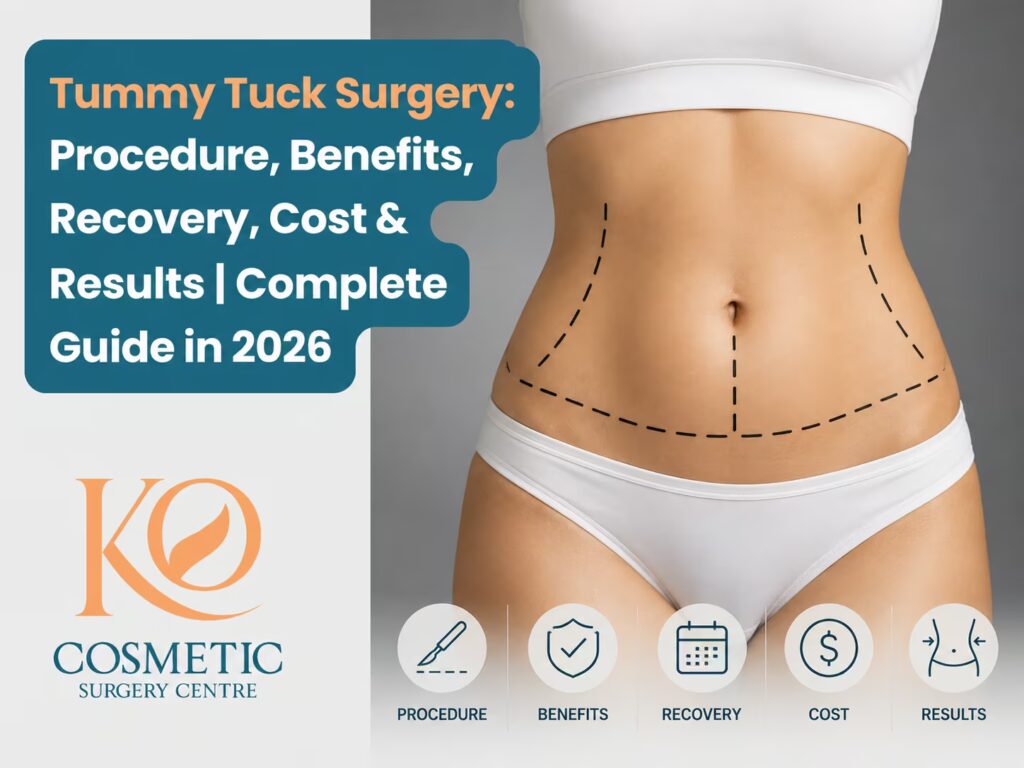
Before the operation, the surgeon makes precise markings on the abdomen to identify the areas of excess skin, planned incisions, and the desired contour. These markings serve as a guide during the procedure.
3. Incision and Tissue Correction
A carefully positioned incision is made along the lower abdomen, typically where it can be concealed beneath underwear or swimwear. The surgeon lifts the skin, repairs separated abdominal muscles if necessary, removes excess skin and fat, and repositions the remaining tissue to create a flatter appearance. In a full tummy tuck, the belly button is repositioned to maintain a natural look.
4. Closing the Incisions
Once the desired contour is achieved, the incisions are closed using sutures. Surgical drains may be placed temporarily to help remove excess fluid during the initial healing period, and a compression garment is usually applied to support recovery.
The length of the surgery varies depending on the type of tummy tuck being performed and the extent of correction required.
Recovery Time
Recovery after a tummy tuck varies depending on the type of procedure performed, your overall health, and how closely you follow your surgeon’s postoperative instructions. Most patients can return to light daily activities within 2 to 4 weeks, while more strenuous activities and heavy lifting should generally be avoided for about 6 weeks or as advised by the surgeon. Swelling, bruising, and mild discomfort are common during the early stages of healing and gradually improve over the following weeks. Although many patients notice visible improvements within a few weeks, the final results become more apparent over the next 3 to 6 months as swelling subsides and the body continues to heal. Wearing a compression garment, attending follow-up appointments, and maintaining a healthy lifestyle can support a smoother recovery and long-lasting results.
Benefits of Tummy Tuck
A tummy tuck can significantly improve the appearance of the abdomen by removing excess skin and fat while tightening weakened abdominal muscles and connective tissues. The procedure helps create a flatter, firmer, and more defined abdominal contour, improves waistline shape, enhances the fit of clothing, and boosts overall body confidence. For many patients, the results are long-lasting when combined with a stable weight, regular exercise, and a healthy lifestyle, making tummy tuck surgery an effective solution for achieving a smoother and more toned midsection.
Risks and Considerations
Like any surgical procedure, a tummy tuck carries certain risks and requires careful consideration before treatment. Potential complications may include bleeding, infection, fluid accumulation (seroma), delayed wound healing, noticeable scarring, temporary or permanent changes in skin sensation, blood clots, and reactions to anesthesia. While these risks are uncommon when the procedure is performed by a qualified plastic surgeon, following all preoperative and postoperative instructions—such as avoiding smoking, maintaining a healthy lifestyle, wearing compression garments, attending follow-up appointments, and allowing adequate time for recovery—can help minimize complications and support proper healing. It is also important to have realistic expectations, as a tummy tuck improves abdominal contour but is not a substitute for weight loss or a healthy lifestyle.
Tummy Tuck vs Liposuction
Although both procedures improve body contour, they serve different purposes.
| Tummy Tuck | Liposuction |
| Removes excess skin | Removes excess fat |
| Repairs abdominal muscles | Does not repair muscles |
| Tightens abdominal wall | Skin tightening is limited |
| Best for loose skin and muscle separation | Best for localized fat deposits |
In some patients, liposuction may be combined with a tummy tuck to enhance overall body contour when appropriate.
Before & After Expectations
Before surgery, patients undergo a medical evaluation, discuss their goals, review medical history, and receive detailed instructions regarding medications, smoking cessation, and recovery planning.
After surgery, patients should expect temporary swelling, bruising, and discomfort during healing. Results improve gradually over several weeks and months as swelling decreases. Maintaining a stable weight and healthy lifestyle helps preserve the outcome for many years.
Why Choose KO Cosmetic Surgery for Tummy Tuck?
At KO Cosmetic Surgery, we understand that every patient’s body and aesthetic goals are unique. Our experienced surgical team provides comprehensive consultations, personalized treatment plans, and attentive postoperative care to help patients achieve safe, natural-looking results.
From your first consultation through recovery, we focus on patient safety, advanced surgical techniques, and clear communication at every stage of treatment. Whether your concerns stem from pregnancy, weight loss, or aging, we work with you to create an individualized approach that supports your goals and overall well-being.
If you’re considering tummy tuck surgery, schedule a consultation with KO Cosmetic Surgery to learn whether abdominoplasty is the right option for you.