
Hair loss is more than just a cosmetic concern — it can affect your confidence, personality, and everyday life. Many people in Coimbatore struggle with receding hairlines, thinning hair, and bald patches caused by genetics, stress, hormonal imbalance, or lifestyle factors. Over time, these issues can make individuals look older and impact their self-esteem.
The good news is that modern hair restoration treatments offer a safe and permanent solution. Advanced procedures like FUE hair transplant can restore natural hair growth with minimal downtime and long-lasting results. If you are searching for the hair transplant cost in Coimbatore, understanding the procedure, pricing, graft requirements, and recovery process can help you make the right decision.
At Ko Cosmetic Surgery, patients receive advanced hair transplant treatments tailored to their hair loss condition and aesthetic goals. Using modern techniques and personalized care, the clinic focuses on achieving natural-looking density and long-term hair restoration results.
What Is a Hair Transplant?
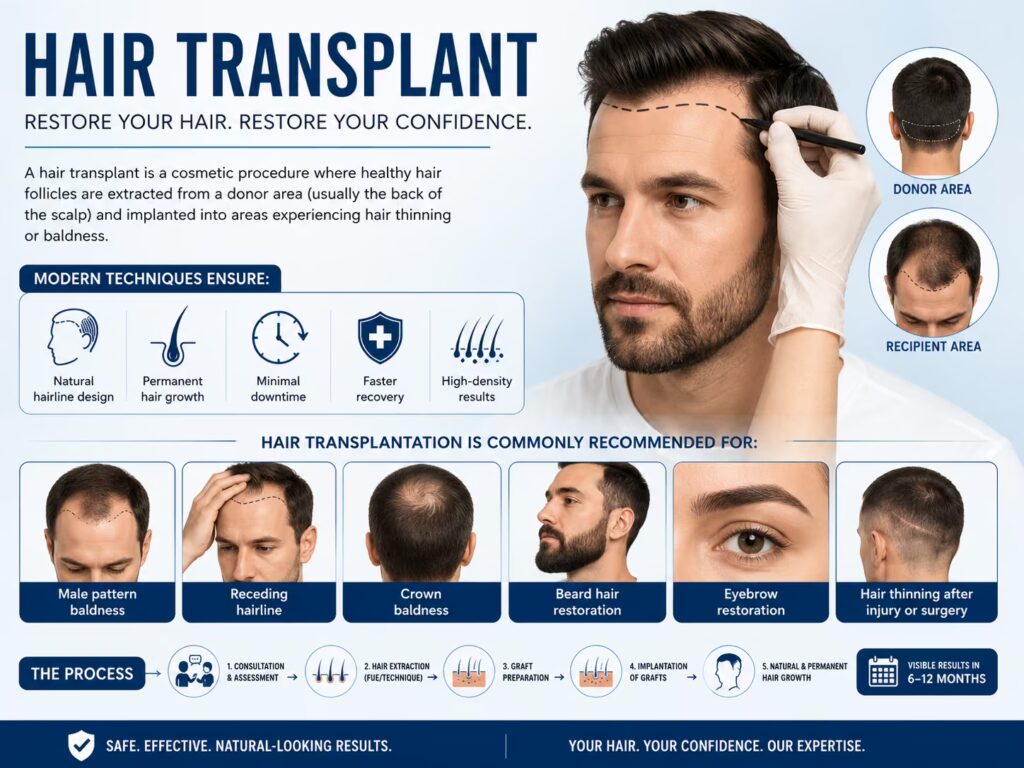
A hair transplant is a cosmetic procedure where healthy hair follicles are extracted from a donor area (usually the back of the scalp) and implanted into areas experiencing hair thinning or baldness.
Modern techniques ensure:
- Natural hairline design
- Permanent hair growth
- Minimal downtime
- Faster recovery
- High-density results
Hair transplantation is commonly recommended for:
- Male pattern baldness
- Receding hairline
- Crown baldness
- Beard hair restoration
- Eyebrow restoration
- Hair thinning after injury or surgery
Hair Transplant Cost in Coimbatore
Hair transplant cost in Coimbatore generally depends on several factors, including the number of grafts required, the technique used for the procedure, the surgeon’s expertise, the clinic’s infrastructure, the expected hair density, and the extent of baldness. These factors can vary from person to person, which is why the overall treatment cost may differ based on individual hair restoration needs.
Average Hair Transplant Price in Coimbatore
| Procedure Type | Estimated Cost Range |
| Basic Hair Transplant | ₹40,000 – ₹70,000 |
| FUE Hair Transplant | ₹60,000 – ₹1,50,000 |
| Advanced Dense Packing | ₹1,00,000 – ₹2,50,000 |
| Beard Hair Transplant | ₹30,000 – ₹80,000 |
| Eyebrow Hair Transplant | ₹25,000 – ₹60,000 |
The final cost depends mainly on the number of grafts needed for complete coverage.
What Affects Hair Transplant Cost?
Several factors influence the total hair restoration cost:
1. Number of Grafts Required
Hair transplant pricing is usually calculated based on grafts.
Typical graft requirements:
- Mild hair loss: 1000–1500 grafts
- Moderate baldness: 2000–3000 grafts
- Severe baldness: 3500–5000 grafts
More grafts require more procedure time and expertise, increasing the cost.
2. Technique Used
FUE Hair Transplant Cost
In FUE (Follicular Unit Extraction), individual hair follicles are carefully extracted from the donor area, usually the back or sides of the scalp, and implanted into bald or thinning areas with precision. This advanced technique is widely preferred because it provides natural-looking results with minimal scarring and a quicker recovery period. Since each graft is placed strategically to match the natural direction and density of hair growth, the final outcome appears more realistic and aesthetically pleasing.
Benefits of FUE Hair Transplant:
• No visible linear scar
• Faster healing process
• Minimal discomfort during recovery
• Natural hairline and appearance
• Short recovery time
• Less downtime compared to traditional methods
• Suitable for people who prefer short hairstyles
• Lower risk of complications and stitches
The FUE hair transplant cost is usually slightly higher because the procedure requires advanced technology, specialized instruments, and a high level of precision from experienced surgeons. The overall cost may also vary depending on the number of grafts needed, the extent of hair loss, and the desired hair density.
How Many Grafts Do You Need?
The number of grafts varies based on the stage of hair loss.
| Hair Loss Area | Approximate Grafts |
| Hairline Restoration | 1000–1500 |
| Front Scalp Coverage | 1500–2500 |
| Crown Area | 1200–2500 |
| Full Scalp Coverage | 3500–5000 |
A consultation with an experienced surgeon helps determine the right graft count for natural density.
Hair Transplant Procedure Step-by-Step
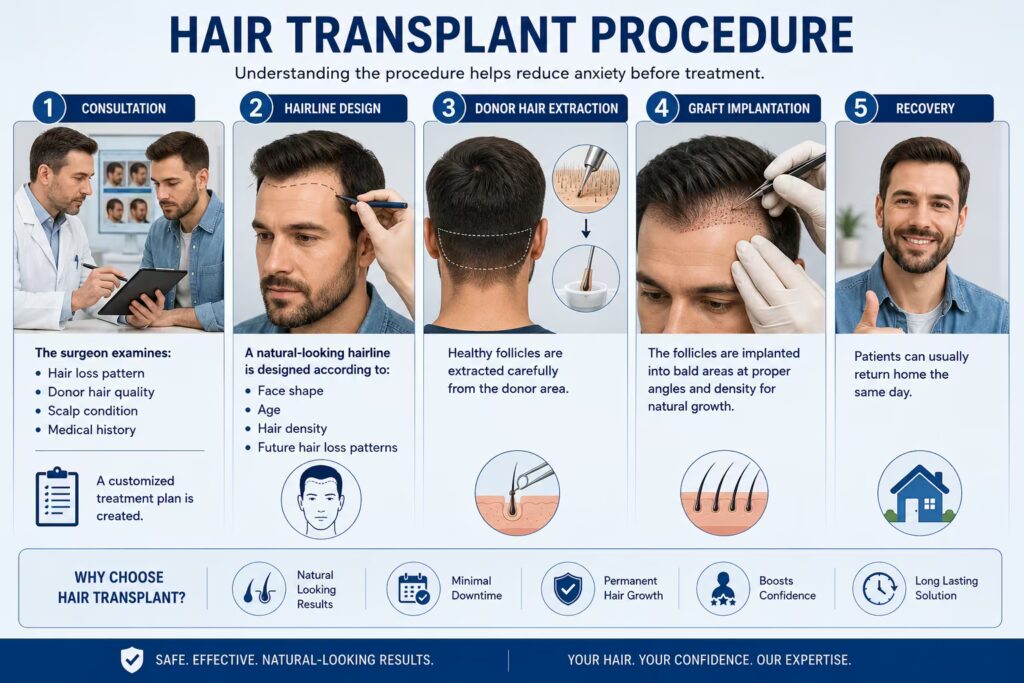
Step 1 – Consultation and Hair Analysis
The first and most important stage is the consultation. During this session, the hair transplant surgeon performs a detailed scalp and hair analysis to understand the patient’s condition and determine the best treatment approach.
The Surgeon Evaluates:
- Hair loss pattern and stage of baldness
- Thickness and quality of donor hair
- Scalp condition and skin health
- Family history of hair loss
- Medical history and lifestyle factors
- Previous hair treatments or surgeries
Every patient experiences hair loss differently. Some individuals may have a receding hairline, while others may experience crown baldness, patchy hair loss, or overall hair thinning. A detailed consultation is an essential step in the hair transplant process because it helps the surgeon understand the patient’s hair condition, scalp health, and long-term expectations. Based on this evaluation, a personalized treatment plan is created to achieve natural and long-lasting results.
During the consultation, the surgeon carefully assesses several important factors, including:
• Number of grafts required
• Suitable hair transplant technique
• Expected hair density and coverage
• Future hair loss possibilities
• Natural hairline design and planning
• Donor area strength and hair quality
The surgeon also provides complete information about the procedure, including:
• Estimated procedure duration
• Recovery timeline and expectations
• Post-treatment care instructions
• Possible side effects and precautions
• Estimated hair transplant cost
This consultation session also gives patients the opportunity to ask questions, discuss concerns, and understand realistic expectations regarding the final outcome. Proper planning before the procedure helps ensure safer treatment, better results, and higher patient satisfaction.
Step 2 – Hairline Design
Hairline design is one of the most crucial parts of a successful hair transplant because it determines how natural the final result will look.
Customized Hairline Planning
The surgeon carefully designs the hairline according to:
- Face shape
- Age
- Existing hair density
- Forehead proportion
- Ethnic features
- Future hair loss pattern
The goal is to create a balanced and natural appearance rather than an artificially straight or overly dense hairline.
Importance of Natural Hairline Design
An experienced surgeon avoids placing the hairline too low because future hair loss may make it appear unnatural later. Proper planning ensures:
- Long-term aesthetic balance
- Natural facial framing
- Better age-appropriate appearance
- Consistent hair growth pattern
The patient can review and discuss the proposed hairline before the procedure begins.
Step 3 – Donor Hair Extraction
Once the hairline is finalized, the surgeon begins extracting healthy hair follicles from the donor area, usually located at the back or sides of the scalp.
These donor hairs are genetically resistant to hair loss, making them ideal for transplantation.
FUE Hair Extraction Process
In FUE (Follicular Unit Extraction):
- Individual follicles are removed one by one
- Tiny precision instruments are used
- No large cuts or stitches are required
Benefits of FUE Extraction
- Minimal scarring
- Faster healing
- Reduced discomfort
- Natural-looking results
- Short recovery period
The extracted grafts are carefully preserved in a specialized solution to maintain their survival and growth potential.
Donor Area Management
The surgeon ensures that donor hair extraction is evenly distributed to avoid visible thinning in the donor region. Proper extraction technique is essential for maintaining overall scalp appearance.
Step 4 – Graft Implantation
After extraction, the prepared follicles are implanted into the bald or thinning areas.
This stage requires precision, artistic planning, and technical expertise.
Implantation Process
Tiny channels or incisions are created in the recipient area based on:
- Hair growth direction
- Natural angle of hair
- Density requirements
- Existing hair pattern
The follicles are then implanted carefully into these channels.
Why Implantation Technique Matters
Proper implantation determines:
- Natural appearance
- Hair density
- Hair growth direction
- Overall transplant success
A skilled surgeon ensures that:
- Front hairlines appear soft and natural
- Density looks balanced
- Hair grows uniformly
- Results blend with existing hair
The procedure is performed under local anesthesia, so patients remain comfortable throughout the session.
Depending on the graft count, implantation may take several hours.
Step 5 – Recovery and Post-Procedure Care
After the procedure, patients can usually return home the same day.
The transplanted area may show:
- Mild redness
- Tiny scabs
- Slight swelling
- Temporary sensitivity
These are normal and usually subside within a few days.
Hair Transplant Recovery Timeline
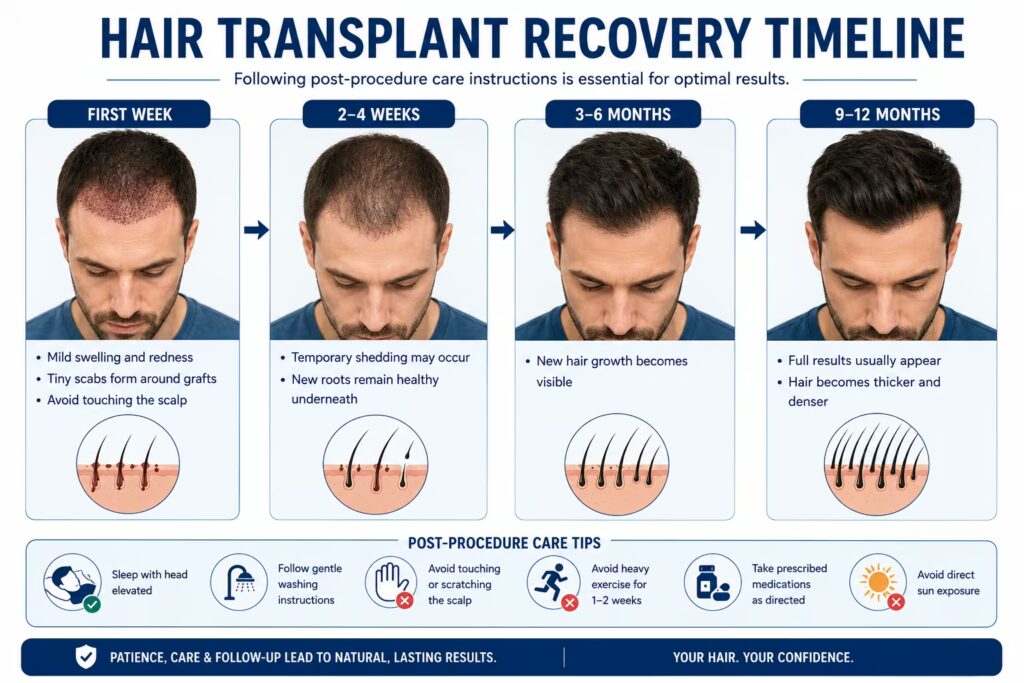
First Week
- Mild swelling and redness
- Tiny scabs form around grafts
- Avoid touching the scalp
2–4 Weeks
- Temporary shedding may occur
- New roots remain healthy underneath
3–6 Months
- New hair growth becomes visible
9–12 Months
- Full results usually appear
- Hair becomes thicker and denser
Following post-procedure care instructions is essential for optimal results.
Before and After Results
Modern hair transplantation offers advanced and natural-looking solutions for people experiencing hair loss. With improved techniques and precision-based procedures, patients can achieve a fuller and more youthful appearance. The treatment is designed to restore hair growth naturally while maintaining the original direction and density of the hair.
Benefits of modern hair transplantation include:
• Natural hairline restoration
• Improved hair density and coverage
• Permanent and long-lasting results
• Enhanced facial appearance
• Increased self-confidence and self-esteem
• Natural-looking hair growth
• Minimal scarring and faster recovery with advanced techniques
The results of a hair transplant continue to improve gradually over several months as the transplanted follicles begin to grow naturally. Initially, temporary shedding may occur, which is a normal part of the healing process. Over time, new healthy hair growth becomes visible, leading to thicker, denser, and more natural-looking hair. Full results are typically achieved within 9 to 12 months depending on the individual’s hair growth cycle and post-treatment care.
Is Hair Transplant Permanent?
Yes. Transplanted hair follicles are usually resistant to hair loss and continue growing permanently in most patients.However, maintaining overall scalp health and following medical advice helps preserve long-term results.
Why Choose KO Cosmetic Surgery?
Choosing the best hair transplant clinic in Coimbatore is essential for achieving safe, natural-looking, and long-lasting results. A successful hair transplant not only depends on advanced technology but also on the experience of the medical team and personalized treatment planning.
Why patients choose KO Cosmetic Surgery for hair transplant treatments:
• Experienced cosmetic surgery team
• Advanced FUE hair transplant techniques
• Personalized treatment planning for every patient
• Natural hairline design and density management
• Modern surgical infrastructure and facilities
• Affordable and transparent pricing options
• Comprehensive post-treatment care and support
• Focus on patient comfort, hygiene, and safety
• Use of advanced equipment for precise graft placement
The clinic is committed to delivering natural-looking hair restoration results while maintaining the highest standards of patient care and safety. From the initial consultation to post-procedure recovery, every step is carefully planned to ensure patient satisfaction, improved appearance, and long-term confidence.
Tips Before Getting a Hair Transplant
Before undergoing treatment:
- Choose an experienced clinic
- Understand graft requirements
- Discuss realistic expectations
- Avoid smoking and alcohol before surgery
- Follow pre-procedure instructions carefully
Frequently Asked Questions
Is Hair Transplant Painful?
Hair transplant procedures are generally not painful because they are performed under local anesthesia. Before the procedure begins, the surgeon numbs both the donor area and the treatment area to ensure patient comfort throughout the session.
Patients may experience:
- Mild pressure during the procedure
- Slight discomfort during anesthesia injection
- Minor soreness after the treatment
However, severe pain is uncommon. Most patients remain relaxed, watch videos, listen to music, or take short breaks during the procedure.
After the Procedure
Once the anesthesia effect reduces, there may be:
- Mild swelling
- Tightness in the scalp
- Temporary tenderness
These symptoms usually disappear within a few days and can be managed with prescribed medications.
Modern FUE hair transplant techniques are designed to minimize discomfort and speed up healing.
How Long Does a Hair Transplant Procedure Take?
The duration of a hair transplant depends mainly on:
- Number of grafts required
- Extent of baldness
- Technique used
- Hair density goals
Average Procedure Duration
| Graft Count | Approximate Duration |
| 1000–1500 Grafts | 4–5 Hours |
| 2000–3000 Grafts | 6–8 Hours |
| 3500+ Grafts | Full-Day Session or Multiple Sessions |
The procedure is usually completed in a single day, though larger sessions may require additional time.
Why the Procedure Takes Time
Hair transplantation is a highly precise procedure involving:
- Individual follicle extraction
- Graft preparation
- Hairline planning
- Careful implantation at proper angles
Every graft must be placed carefully to achieve natural-looking density and growth patterns.
Patients are usually allowed short breaks for meals and relaxation during the session.
Can Women Undergo Hair Transplant?
Yes. Hair transplant procedures are not limited to men. Women experiencing certain types of hair loss can also benefit from modern hair restoration treatments.
Common Reasons Women Choose Hair Transplant
- Hair thinning
- Receding hairline
- Patchy hair loss
- Eyebrow hair loss
- Hair loss due to injury or surgery
- Genetic hair thinning
Women generally prefer treatments that restore natural density without affecting their existing hair appearance.
Important Evaluation for Female Patients
Before recommending surgery, the surgeon evaluates:
- Type of hair loss
- Hormonal conditions
- Donor hair quality
- Scalp health
- Overall hair density
Not all female hair loss patterns are suitable for transplantation, so proper diagnosis is essential.
With proper planning, women can achieve natural and long-lasting results.
When Can I Return to Work After Hair Transplant?
Most patients can return to office work within 2–5 days after the procedure.
Recovery time depends on:
- Type of work
- Number of grafts transplanted
- Individual healing response
Typical Recovery Timeline
Day 1–3
- Mild swelling and redness
- Rest is recommended
Day 4–7
- Scabs begin healing
- Patients usually feel comfortable going outside
After 1 Week
- Most visible signs reduce significantly
Is FUE Better Than FUT?
FUE (Follicular Unit Extraction) and FUT (Follicular Unit Transplantation) are both effective hair transplant methods, but FUE has become more popular due to its cosmetic advantages and faster recovery.
What Is FUE?
In FUE (Follicular Unit Extraction), individual hair follicles are extracted separately from the donor area using tiny micro-punch tools and then implanted carefully into bald or thinning areas. Unlike traditional methods, no large incision is made during the procedure, which makes FUE a minimally invasive and highly advanced hair restoration technique.
Advantages of FUE Hair Transplant
• Minimal scarring with no visible linear scar
• Faster healing and recovery process
• Less discomfort during and after the procedure
• Natural-looking hair growth and hairline design
• Short recovery period with minimal downtime
• Suitable for people who prefer short hairstyles
• No stitches or sutures required
• Lower risk of complications and swelling
• Precise graft placement for better density and appearance
Because there are no stitches involved, most patients experience a more comfortable recovery compared to traditional hair transplant procedures. Many individuals can return to their normal routine within a few days while the transplanted hair follicles continue to heal and grow naturally over time.
Why Most Patients Prefer FUE
Today, FUE is considered the preferred technique for many patients because it offers:
- Better cosmetic appearance
- Faster return to daily activities
- Less visible scarring
- Improved patient comfort
However, the best technique depends on:
- Hair loss severity
- Donor hair availability
- Budget
- Hair characteristics
- Surgeon recommendation
An experienced hair transplant surgeon can determine the most suitable option after a detailed scalp evaluation.
Conclusion
Understanding the hair transplant cost in Coimbatore helps you make an informed decision about hair restoration treatment. Factors like graft count, technique, surgeon expertise, and expected density influence the final price.
If you are looking for advanced hair restoration with natural-looking results, Ko Cosmetic Surgery offers modern hair transplant solutions tailored to individual needs.
Book a consultation today to understand the ideal treatment plan and estimated graft requirement for your hair restoration journey.