

Vaginal Agenesis & MRKH Syndrome Treatment in Coimbatore

Expert evaluation and advanced vaginal reconstruction including laparoscopic colovaginoplasty at KO Cosmetic Surgery Centre. Confidential, ethical, and evidence-based care for long-term functional outcomes.

Why choose Ko cosmetic surgery centre for Cosmetic Gynaecology procedures

What is Jawline Correction ?

Overview   Vaginal agenesis is a congenital condition where the vaginal canal is absent or underdeveloped due to incomplete Müllerian duct formation during fetal life. It is commonly associated with MRKH Syndrome. Affected individuals usually have normal ovaries and secondary sexual development, but menstruation does not occur. Diagnosis involves clinical examination, imaging, hormonal evaluation, and assessment for associated anomalies.

Causes  Vaginal agenesis develops during embryonic growth when the Müllerian structures fail to form properly. The exact genetic reason is not always identifiable, but it results from developmental arrest before birth. It is not caused by lifestyle factors and cannot be prevented. Most patients have normal hormonal function, ovarian activity, and intellectual development.

Solutions  Treatment focuses on creating a functional vaginal canal while preserving long-term stability and emotional wellbeing. Depending on anatomy and patient readiness, management may include supervised dilation or advanced reconstructive surgery. A personalized, multidisciplinary approach ensures safe outcomes, restored function, and psychological support.

Types of Treatments

Non-surgical vaginal dilation treatment icon for vaginal agenesis management

Non-Surgical Vaginal Dilation

Non-surgical vaginal dilation is often the first recommended approach in selected patients. Medical dilators are used gradually under supervision to create a vaginal canal through controlled, progressive pressure. It avoids surgery and anesthesia with minimal medical risk, but requires strong motivation, consistency, and regular follow-up for successful long-term results.

McIndoe vaginoplasty surgical reconstruction icon for vaginal agenesis treatment

McIndoe Vaginoplasty

McIndoe vaginoplasty is a well-established surgical technique where a space is created between the bladder and rectum and lined with a skin graft to form a vaginal canal. It offers predictable depth, especially when dilation fails. Post-operative dilation is mandatory to prevent graft contracture and ensure stable long-term outcomes.
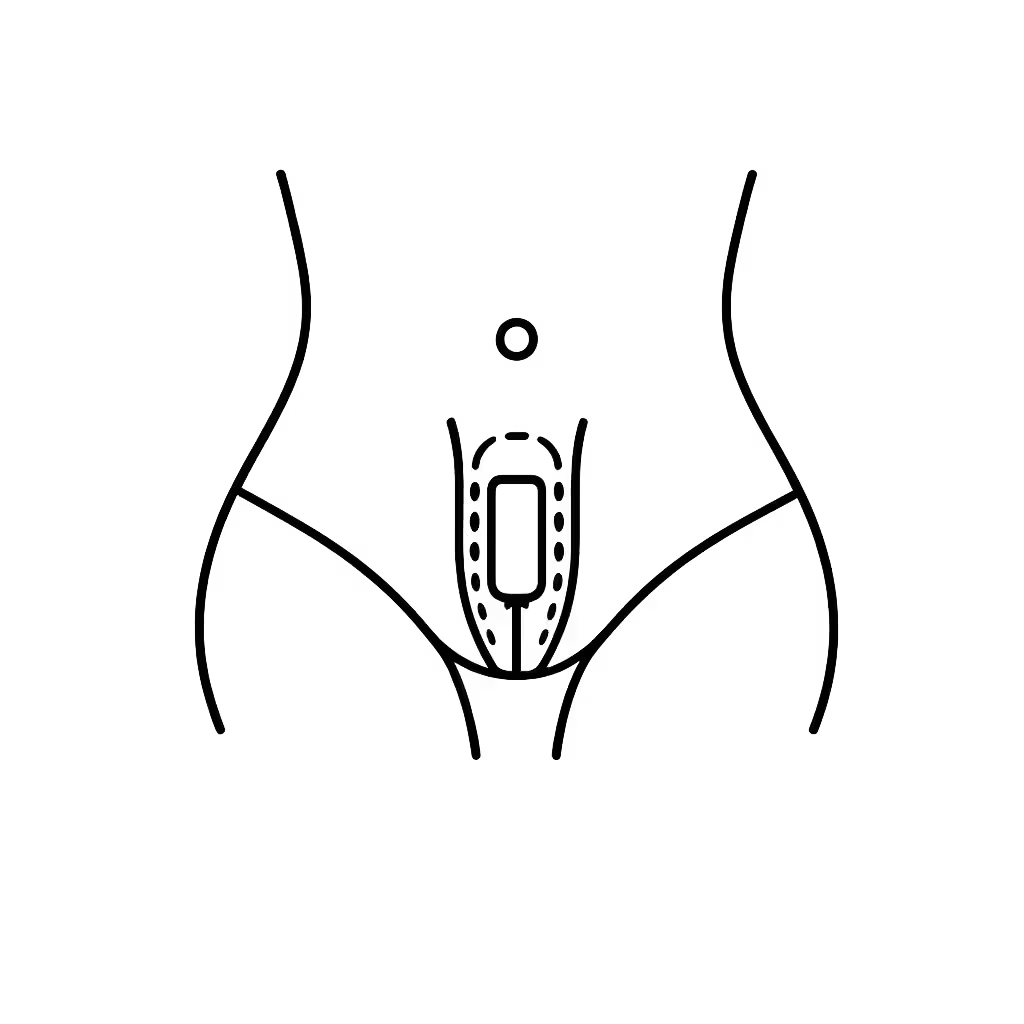
Vecchietti laparoscopic procedure icon for vaginal canal reconstruction

Vecchietti Procedure

The Vecchietti procedure is a minimally invasive laparoscopic method that gradually creates a vaginal canal using internal traction. It involves small incisions, faster recovery, and no external skin graft. Controlled tension allows progressive tissue expansion and is effective in carefully selected patients with favorable anatomy.

McIndoe vaginoplasty surgical reconstruction icon for vaginal agenesis treatment

Laparoscopic Colovaginoplasty

Laparoscopic colovaginoplasty is an advanced minimally invasive reconstructive procedure in which a segment of the sigmoid colon is mobilized laparoscopically and fashioned into a neovagina with preserved blood supply. It offers natural lubrication, durable depth, minimal scarring, shorter recovery, and reliable long-term functional outcomes when performed by an experienced specialist.

Surgery Procedures and Recovery Time

Pre-Operative Evaluation   Pre-operative evaluation includes a detailed medical history, pelvic imaging such as ultrasound or MRI, hormonal assessment, and renal evaluation since MRKH may be associated with kidney anomalies. Psychological counselling is also essential. Informed consent and realistic expectation setting are carefully discussed before surgery.

Procedure   The surgery is performed under general anesthesia using high-definition laparoscopic instruments for precise dissection and reconstruction. In laparoscopic colovaginoplasty, a segment of intestine is mobilized with preserved blood supply and positioned to create a functional neovagina. Hospital stay usually ranges from 3 to 7 days.

Recovery  Initial healing typically takes four to six weeks, followed by a gradual return to daily activities. Regular follow-up visits ensure proper recovery and monitoring. In intestinal vaginoplasty cases, long-term dilation needs are minimal. Stable outcomes depend on adherence to post-operative care instructions.

FAQ

Why is psychological and emotional support important in vaginal agenesis treatment?

A diagnosis of vaginal agenesis can be emotionally overwhelming, especially during adolescence or early adulthood. Comprehensive care includes private consultations, emotional reassurance, education about reproductive options, and structured long-term follow-up support. A compassionate and confidential environment is essential to ensure patient comfort, trust, and overall wellbeing throughout the treatment journey.

Is vaginal agenesis curable?

A diagnosis of vaginal agenesis can be emotionally overwhelming, especially during adolescence or early adulthood. Comprehensive care includes private consultations, emotional reassurance, education about reproductive options, and structured long-term follow-up support. A compassionate and confidential environment is essential to ensure patient comfort, trust, and overall wellbeing throughout the treatment journey.

Can women with MRKH have biological children?

Yes. Since ovarian function is usually normal, egg retrieval is possible. Pregnancy can be achieved through assisted reproductive techniques and surrogacy.

Is laparoscopic colovaginoplasty safe?

When performed by a trained specialist, it is generally safe and provides reliable long-term functional outcomes.

How soon can normal activities resume?

Light activities can usually be resumed within a few weeks. Full recovery depends on individual healing and the type of procedure performed.

Is there an ideal age for treatment?

Treatment is usually considered during late adolescence or early adulthood, especially after puberty, when the patient is emotionally and physically prepared. The exact timing is decided after detailed medical evaluation and counseling.

What is the right age to undergo surgery?

Surgery is typically recommended after puberty, often between 16–21 years of age, when physical development is complete and the patient is mentally prepared. However, the final decision depends on individual health condition and specialist advice.

Is confidentiality maintained?

Yes. Every consultation and treatment is conducted with complete privacy and strict medical confidentiality.